Field Notes
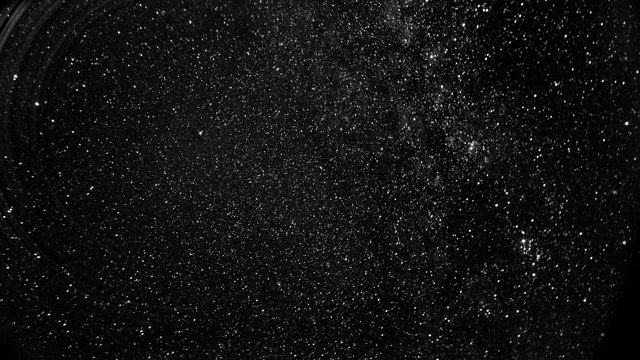
Peter, on first seeing it: "that is so beautiful."
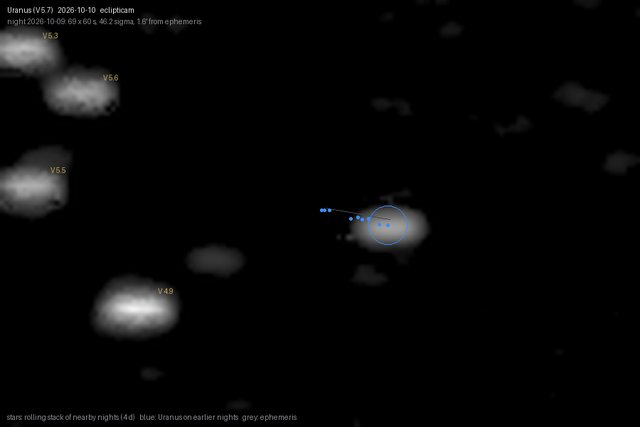
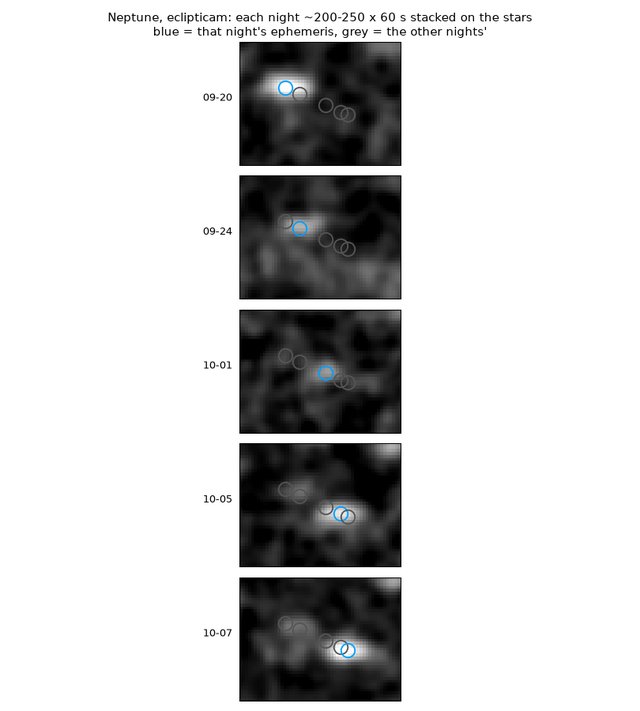
Uranus is the next planet out from Saturn and the one in from Neptune, and at magnitude 5.7 it is two magnitudes brighter than Neptune: 6 times the light. It is in Taurus this year, six and a half degrees from the Pleiades.
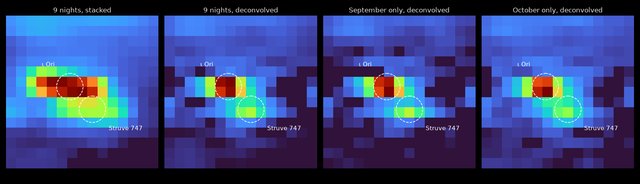
Peter: "we should have a field note for sharpest thing resolved." This is it, and it will be updated whenever the record falls.
Sizes on the sky are angles. A circle is 360 degrees, a degree is 60 arcminutes (1′), and an arcminute is 60 arcseconds (1″).
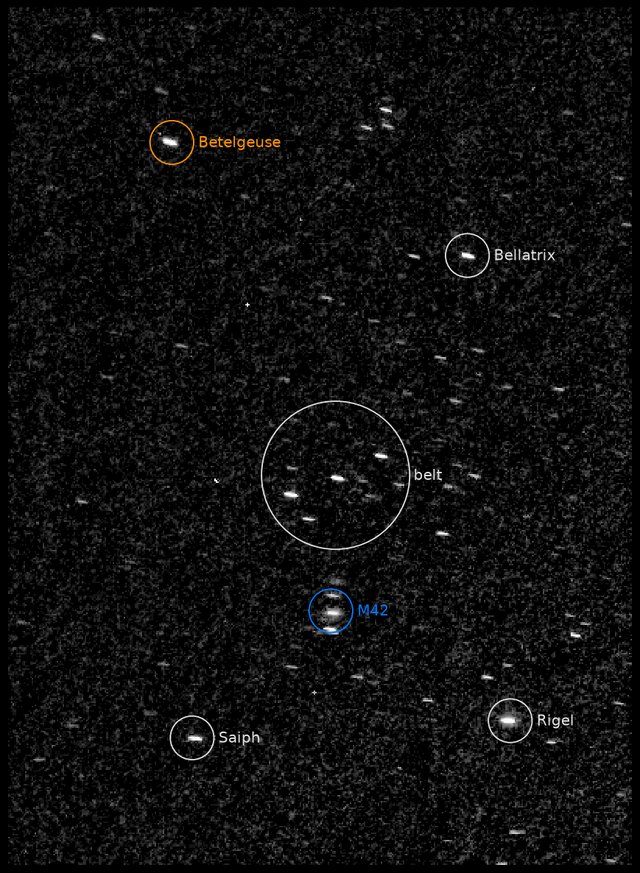
Peter: "recent screenshot has orion and M42 circled in blue. I like 1 being Betelgeuse, maybe we can detect its redness. It would be nice to see how sharp we can get M42, my first nebula." Both turn out to be visible in a camera pointed at the sky over the rooftops: Betelgeuse's colour in every frame, and a hint of the nebula after two hours of stacking.
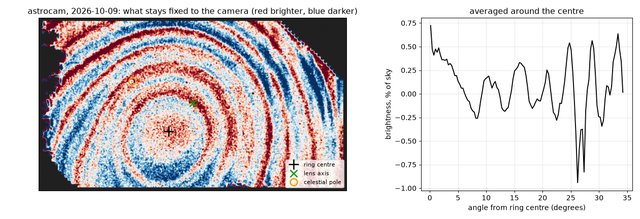
Peter: "the glass cover for the camera is very thin and flat. probably the cause of the newton's rings."
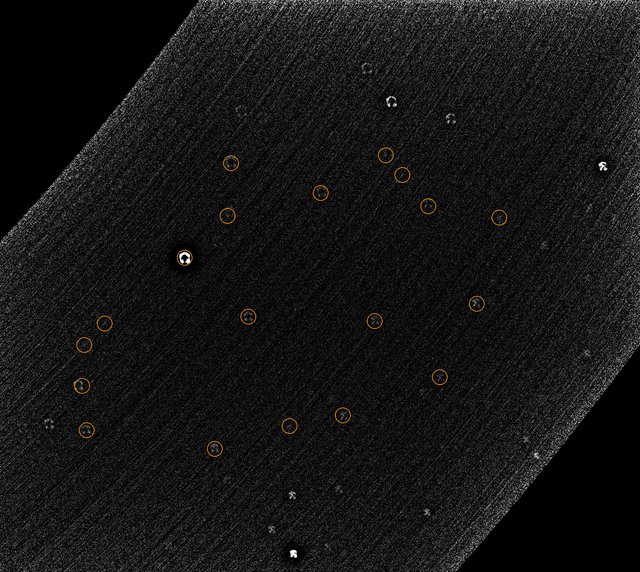
A 76 mm scope with no tracking, stacking half an hour of three-second frames, reaches about 12th magnitude. The interesting part is not the number but how you get it without a star catalogue: count how many stars you can see in a known patch of sky, and look up how many stars there are supposed to be. The sky itself is the calibration.
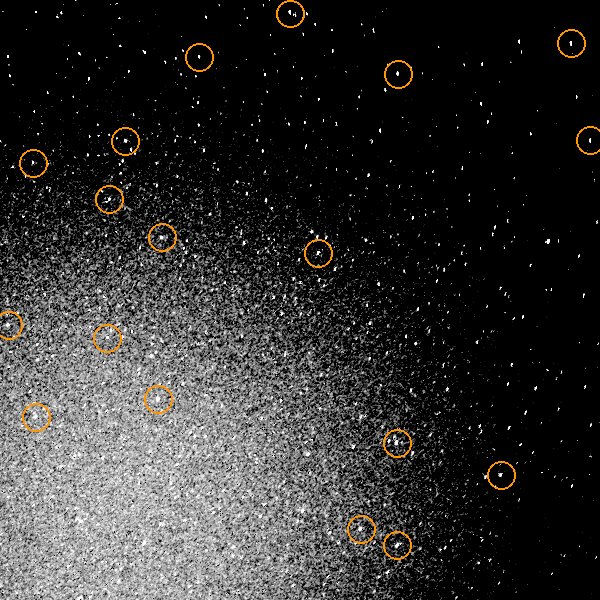
A camera that knows nothing about the sky can still be told where it is pointing and how sensitive it is, by the stars in its own picture. It works in two steps: first work out which stars these are, then look up how bright they are already known to be. Do both on one frame and the camera has calibrated itself against the sky it was photographing.
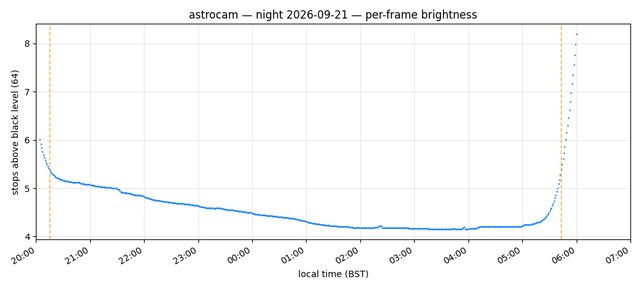
Looking at light pollution maps Surbiton is on the fringe of urban/suburban London, quite near to Heathrow Airport, M25 and M4 so a provisional brightness figure of 19 is reasonable. However, we can measure the actual brightness by identifying stars, looking up their measured magnitudes (brightnesses) and using that to calibrate our measurements. We also need to know the background darkness. We found that the brightness was closer to 18 than 19, 18.1 being a reasonable figure.

A 76 mm scope with no tracking and no finder, stacking 600 three-second frames, lands within 12 percent of the theoretical best a stack of that depth can do. De-rotating about the celestial pole recovers a 19.2x drop in noise where a perfect square-root-of-N stack would give 21.7x. The rest of the night's interest is in what the number costs to get: how close the field sits to the pole, and how long a star therefore dwells inside it.